Quick Summary
- Space Amplification: How custom mirrors double the perceived square footage of narrow Edmonton entryways.
- The Designer’s Edge: Why off-the-shelf mirrors fail where bespoke glass excels in high-end renovations.
- Red Seal Glass Standards: Overview of our journeyman-led installation process and safety protocols.
- The 2026 Aesthetic: Integration of LED lighting, antiqued finishes, and minimalist frameless mounting.
- Local Logistics: Navigating Alberta’s climate considerations for glass adhesion and structural settling.
- Maintenance Mastery: How to preserve the silvering and clarity of large-scale reflective surfaces.
The Role of Custom Glass in Modern Interior Design
Interior design is often a battle against physical constraints. Designers in the Greater Edmonton Area frequently face challenges such as limited natural light during winter months or awkwardly shaped floor plans in older suburban builds. Custom mirrors are the most effective tool to solve these architectural puzzles. Unlike mass-produced mirrors, bespoke glass is cut to the exact millimetre, allowing for seamless integration into alcoves, cabinetry, or entire feature walls.
If you are a homeowner or a design professional, your goal is likely to create a space that feels expansive, bright, and intentional. This guide explores the technical and aesthetic advantages of choosing custom mirror services over standard retail options, ensuring your next renovation project meets the highest standards of durability and style.
Why Custom Mirrors Outperform Retail Alternatives
Retail mirrors are limited by standard sizing and lower-grade glass. When a designer specifies a custom mirror, they are prioritizing three critical factors: scale, safety, and silvering quality.
Precision Sizing for Flawless Integration
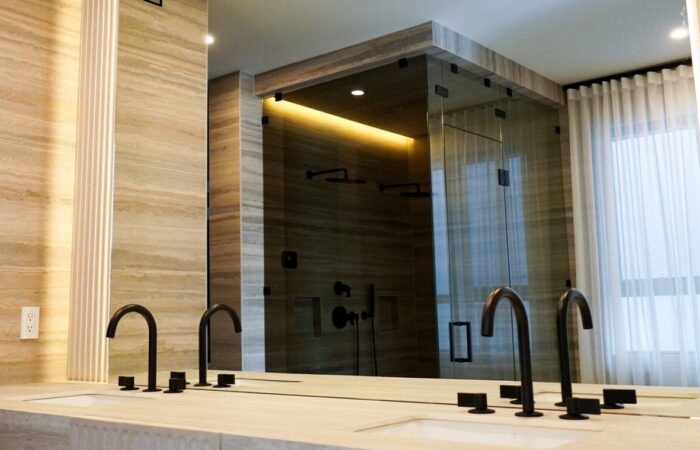
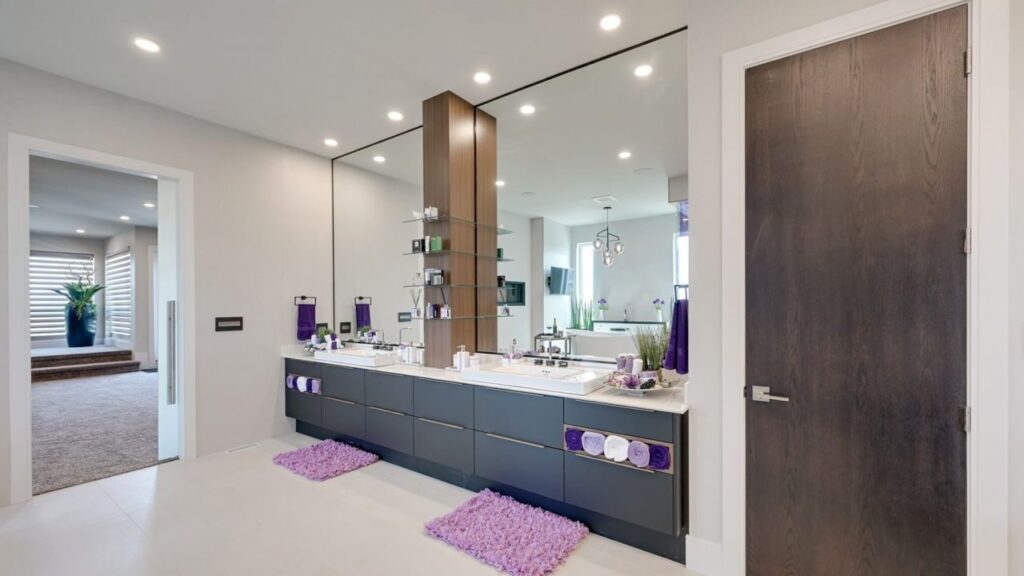
In a luxury home, a gap of even half an inch between a mirror and a vanity wall can ruin the visual flow. Custom mirrors allow for wall-to-wall or floor-to-ceiling applications. This creates a continuous reflective surface that makes walls appear to disappear, a technique frequently used in floor-to-ceiling glass walls to bridge the gap between different functional zones of a home.
Superior Material Grade
Standard mirrors often use thinner glass that can warp or funhouse when produced in larger sizes. Professional-grade custom mirrors utilize 6mm (1/4 inch) thick glass with high-quality silvering. This ensures the reflection remains true across the entire surface, which is essential for gym mirrors or dressing rooms where accuracy is paramount.
The Red Seal Glass Precision-Fit Framework
To ensure every installation meets 2026 industry standards for safety and aesthetics, we utilize an installation system known as the Red Seal Precision-Fit Framework. This four-stage process ensures that the glass is not only beautiful but structurally sound within the unique environmental conditions of Alberta.
| Stage | Name | Key Activity | Quality Benchmark |
| Stage 1 | Digital Mapping | Laser-levelling the substrate to identify wall bows or leans. | Tolerance within 0.5mm. |
| Stage 2 | Substrate Prep | Application of specialized primers to ensure mirror mastication adhesion. | 100% bond surface readiness. |
| Stage 3 | Mechanical Set | Utilizing J-channels or clips for secondary mechanical support. | Fail-safe weight distribution. |
| Stage 4 | Edge Sealing | Treating polished edges to prevent black edge oxidation. | Moisture-resistant barrier. |
Strategic Placement: Maximizing the “Secret Weapon”
Interior designers do not just hang mirrors; they position them to manipulate light and perspective.
Leveraging the “Window Effect”
In rooms with limited windows, placing a large custom mirror opposite an existing light source effectively doubles the natural light entering the room. This is particularly valuable in Edmonton during the shorter days of the year, where maximizing every lumen of sunlight is a functional necessity for residential well-being.
Defining Transitions
Large-scale mirrors can be used to define the transition between a kitchen and a dining area. By echoing the materials found in our residential glass project portfolio, designers create a cohesive visual language throughout the home.
Navigating Alberta’s Environmental Impact on Glass
While interior mirrors are shielded from direct snow and rain, the extreme fluctuations in Alberta’s indoor humidity levels present a unique challenge. During Edmonton’s dry winters, indoor humidity can drop significantly, while summer storms can spike moisture levels. These shifts cause building materials like wood studs and drywall to expand and contract at different rates than the glass itself.
The Thermal Expansion Buffer
Our installation teams account for this seasonal shifting by incorporating a 2mm to 3mm expansion joint around the perimeter of large-scale mirrors. Without this buffer, a mirror installed flush against two rigid walls in August might experience edge-pinching in January as the house settles, leading to stress fractures. By utilizing the Red Seal Precision-Fit Framework, we ensure that the mechanical supports allow for these microscopic movements without compromising the safety or alignment of the glass.
Condensation and Silvering Protection
In many Edmonton renovations, custom mirrors are installed in wet zones like home spas or ensuite bathrooms. In these environments, condensation can pool at the bottom of the glass. Over time, this moisture reacts with the silvering, leading to the dreaded black-edge oxidation. We recommend a stand-off installation for these areas, where the mirror is slightly offset from the wall, allowing air to circulate behind the glass and preventing moisture entrapment.
Choosing the Right Mirror Style
Selecting the right glass is only half the battle; selecting the right aesthetic finish defines the room’s character. Use this framework to align your glass choice with your design goals:
- Clear Polished Edge: The gold standard for modern, minimalist designs. It offers a clean, frameless look that is ideal for gym mirrors or full-wall applications.
- Bevelled Edge: A classic choice where the edges are ground down at an angle. This creates a framed effect without an actual frame, catching the light like a prism.
- Low-Iron (Ultra-Clear) Glass: Standard glass has a slight green tint. Low-iron glass removes this tint, providing a perfectly neutral reflection—essential for high-end walk-in closets where colour accuracy is vital.
- Smoke and Bronze Tints: These are decorative choices that reduce reflectivity. They are frequently used in hospitality settings or home bar backsplashes to create an intimate, moody atmosphere.
Ready to transform your space with precision-engineered glass? Contact Red Seal Glass today for a professional consultation and quote on your custom mirror project.
Local Considerations for Edmonton Installations
Installing large glass features in Alberta requires an understanding of local building dynamics.
Structural Settling and Logistics
Edmonton homes experience significant thermal expansion and contraction due to extreme temperature swings between summer and winter. This can cause drywall to shift. If a mirror is installed too tightly against a corner or a ceiling without a relief gap, the pressure from the settling house can cause the glass to crack.
Furthermore, large-scale custom mirrors require specialized transport. We assess elevator dimensions in downtown Edmonton condos and stairwell clearances in mature neighbourhoods like Glenora or Strathearn before the glass is even cut.
The Professional Installation Checklist
If you are managing a renovation, use this step-by-step timeline to ensure your mirror installation is successful.
- Framing Inspection: Ensure the wall has adequate blocking (studs) to support the weight of heavy glass.
- Painting and Finishing: All painting should be completed at least 72 hours prior to installation to allow paint outgassing.
- Site Measurement: Schedule a professional measure only after all cabinetry and trim are permanently installed.
- Fabrication: Allow 7–14 days for high-quality edge polishing and safety tempering if required.
- Installation Day: Clear a path from the entry to the installation site. Expect the process to take 1–3 hours.
- Curing Period: Do not clean or put pressure on the mirror for the first 24–48 hours while the mastic sets.
Common Mistakes in Mirror Specification
Avoid these frequent errors to ensure the longevity of your investment:
- The Handyman Trap: General contractors may use standard construction adhesive containing acids that eat through the silvering. Always use a dedicated mirror masticator.
- Chemical Etching: Using acetic-cure silicone (which smells like vinegar) during installation. The acid in this silicone permanently etches the mirror’s backing within weeks.
- Ignoring Humidity: In bathrooms without proper ventilation, moisture seeps behind the glass. Mirrors should be sealed at the edges or stood off the wall slightly.
- Poor Placement of Outlets: Designers must coordinate electrical outlet locations so the glass can be cut precisely before delivery.
What To Do If Something Goes Wrong
Even with professional installation, glass is a delicate material.
- If you notice a cloudy patch: This may be ghosting. It often occurs if cleaning chemicals seep behind the edge. Stop using spray cleaners directly on the glass; instead, spray a microfiber cloth first.
- If a chip occurs: Small edge chips can sometimes be polished out by a professional glazier if caught early.
- If you see black spots forming: This is edge rot. Check your ventilation. Improving the airflow in the room is the only way to stop the spread.
- If the mirror feels loose: Contact a professional immediately. Do not attempt to re-glue it yourself, as the original bond must be professionally assessed.
The Importance of Journeyman-Led Expertise
The glass industry in Alberta is a regulated trade. Working with a company that employs journeyman-led technicians ensures that your project complies with the safety standards outlined by the SAIT Glazier Program. This level of expertise is what allows for complex installations, such as oversized mirrors in home gyms or intricate glasswork in commercial lobbies.
FAQ: Custom Mirrors and Glass Installation
What is the standard thickness for a custom wall mirror?
For most residential applications, 6mm (1/4 inch) glass is the industry standard. This thickness provides the necessary rigidity to prevent distortion while remaining light enough for secure wall mounting.
Can mirrors be installed over tiled surfaces?
Yes, mirrors can be installed over tile, but it requires specialized drill bits for mechanical fasteners and compatible adhesives. It is essential to ensure the tile is firmly bonded to the wall before adding the weight of the mirror.
How do I clean a custom mirror without damaging the edges?
Use a clean, lint-free microfiber cloth and a dedicated glass cleaner. Never spray cleaner directly onto the mirror; apply it to the cloth first to prevent liquid from pooling at the bottom edge and damaging the silvering.
Do I need tempered glass for my mirror?
Tempering is generally not required for standard wall mirrors unless they are installed in specific high-risk zones, such as inside a shower enclosure or within 18 inches of a floor. Our team evaluates these safety requirements during measurement.
How long does the installation of a custom mirror take?
The physical installation typically takes between one and three hours for a standard room. However, the entire process from measurement and fabrication to final delivery usually spans one to two weeks.
Can you cut holes in mirrors for outlets or lights?
Yes, custom mirrors can be fabricated with precision cutouts for electrical outlets, sconces, or plumbing fixtures. These cuts must be made at the factory before the glass is delivered to the site.
What causes the black spots on the edges of old mirrors?
This is known as edge rot or oxidation. It occurs when moisture or harsh cleaning chemicals penetrate the protective coating on the back of the mirror and react with the silver layer. Professional edge sealing prevents this.
Why should I choose a local Edmonton glazier?
A local glazier understands the regional climate and building codes. Sourcing directly from an Edmonton glass business reduces the risk of breakage during long-distance shipping and ensures faster support if adjustments are needed.
Conclusion
Custom mirrors are more than just reflective surfaces; they are architectural tools that enhance light, improve spatial flow, and add a layer of luxury that retail products cannot match. By following a rigorous installation framework and considering the specific logistical needs of the Edmonton area, homeowners and designers can ensure their glass features remain beautiful for decades.
Ready to start your project? Request a consultation with our expert team to discuss your project dimensions and goals. We provide the technical precision required to make your vision a reality.